Local SEO Services for Service Businesses | Three Points
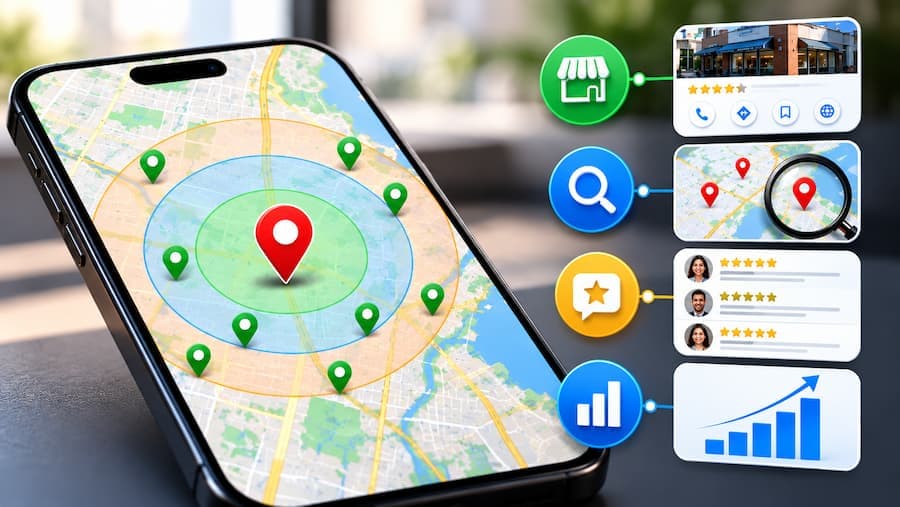
Local SEO helps service businesses show up when nearby customers are ready to call, book, ask for a quote, or compare providers. Whether you run a plumbing company, cleaning service, HVAC crew, landscaping team, repair company, or pro service firm, the goal is simple: make your business easy to find, trust, and contact. With the right mix of website work, Google Business Profile updates, reviews, content, and local trust signals, SEO for local businesses can become a steady source of leads, not a guessing game.
What should local SEO do for a service business?
Local SEO should connect your business with people in your area who already need help. A strong plan helps you show up in map results, organic results, and local searches like seo service near me, emergency plumber near me, or roof repair in my city. It also gives searchers enough trust to choose you over another provider.
For service businesses, visibility alone is not enough. People need to know where you work, what you do, why you are trustworthy, and how to take the next step. That is why local search engine optimization services should support both ranking and conversion. They should improve how your business appears in search and make your website and listings easy to use.
This matters most for companies that do not rely on foot traffic. If customers do not visit a storefront, your online presence becomes your front door. Your website, reviews, service pages, photos, business listings, and contact options all work together to answer one key question: can this company solve my problem near me?
The local search base that supports every lead
Local SEO is built on relevance, distance, and trust. Relevance means your online presence matches the services people want. Distance means search engines can understand the areas you serve. Trust comes from consistent details, reviews, helpful content, quality links, and a professional site.
A service business often needs a wider local reach than one address. You may serve several neighborhoods, cities, counties, or regions. Your SEO plan should make those service areas clear without thin or repeated pages. A useful location page explains the service, the area, common customer needs, and how someone can contact your team.
A strong base usually includes:
- A complete Google Business Profile with accurate categories, services, hours, photos, and contact details.
- Consistent business info across directories, social profiles, and industry sites.
- Service pages that explain what you offer and where you offer it.
- Review habits that show customers you are active and attentive.
- Clear calls to action like call buttons, quote forms, appointment links, and contact options.
- Fast, mobile-friendly pages that help visitors act quickly from a phone.
These basics may sound simple, but they are where many businesses lose chances. If a service is missing, a phone number is wrong, a page is weak, or mobile load time is slow, customers may go elsewhere.
Google Business Profile is your local visibility hub
For many service businesses, Google Business Profile is one of the most important parts of local SEO. It can appear in map results, branded searches, and service-based searches. It also gives customers quick access to your phone number, website, directions if needed, reviews, photos, and business details.
Start with accuracy. Your business name should match your brand. Your phone number should work. Your website link should go to the right page. Your main category should match your core service. Secondary categories can cover related work.
Do not pick categories just because they seem popular.
Your services section should be specific. Instead of listing only repairs, name the service people actually search for. For example, an HVAC company might list AC repair, furnace installation, ductless mini-split service, and maintenance plans. A marketing team that offers local SEO services can also help with Google Business Profile optimization, local citations, reviews, location pages, and technical SEO upgrades.
Photos matter too. Show your team, vehicles, finished work, equipment, office, or service process when it helps. Real images are often better than stock photos because they show that your business is active and real.
Service pages turn searches into leads
Your website should not make people hunt for the service they need. Each core service deserves a clear page that explains the problem, the fix, the process, the service area, and the next step. This is where service SEO becomes more than keywords; it becomes a way to match search intent.
A strong service page usually answers:
- What does the service include?
- Who is it for?
- What problem does it solve?
- What areas do you serve?
- What should the customer expect when they contact you?
- Why should they choose your business?
A page about Local SEO Services for Service Businesses should not just repeat the phrase. It should explain what service businesses need, how optimization supports lead generation, and what practical steps are involved. Keywords help search engines understand the page, but useful information helps customers take action.
Location pages need the same care. A weak page that only swaps the city name will not build trust. A good location page explains the area, lists services, notes availability, and guides people to request help. If your team serves several nearby communities, each page should offer enough unique value to deserve a spot on the site.
Why reviews shape local search and customer trust
Reviews influence both search and trust because they show how real customers feel about your work.
A business with good, recent reviews feels safer to contact than one with little feedback or many complaints. Reviews also give search engines more context about your services, service areas, and customer satisfaction.
The best approach is to make review requests part of your normal workflow. Ask after a finished job, a successful appointment, or a good customer exchange. Keep the request simple and fair. Do not pressure customers, write reviews for them, or offer incentives that break platform rules.
Responding to reviews matters just as much. A short thank-you shows care. A calm reply to criticism shows professionalism. Future customers read those responses to see how you handle problems. A defensive answer can hurt trust, while a respectful one can show accountability.
A practical review process might look like this:
- Identify the right moment. Ask when the customer has just had a good result.
- Make it easy. Send a direct link when the platform allows it.
- Personalize the message. Mention the service completed or thank them for choosing your team.
- Monitor feedback. Track common praise and recurring issues.
- Respond consistently. Keep replies professional, brief, and helpful.
Reviews also support content. If customers often mention speed, communication, cleanliness, skill, or local knowledge, those themes can guide your web copy and service pages.
Content helps you capture more local intent
Not every buyer searches the same way. Some are ready to book right away. Others are still comparing options. Helpful content lets your business show up earlier and build trust before the first call.
Blog posts, guides, and resources can help with pricing, upkeep, warning signs, seasonal needs, service comparisons, and appointments. A local SEO agency can also use content to explain map rankings, citations, reviews, and the difference between local and organic SEO.
The key is to write for real customer questions.
Avoid generic posts that could fit any business in any city.
Local context, service-specific examples, and practical advice make content more useful.
If you serve homeowners, speak to homeowner concerns. If you serve businesses, talk about scheduling, compliance, downtime, budgets, and decision-making. This is where local context makes a page feel real instead of generic.
A useful content plan may include:
- Service education: Explain when a customer needs a service and what happens next.
- Local guides: Share issues or conditions tied to your service area.
- Comparison content: Help readers choose between repair and replacement, one service option and another, or DIY and professional help.
- Problem-solving posts: Cover symptoms, warning signs, common mistakes, and next steps.
- Trust-building content: Introduce your process, values, safety standards, or customer experience.
This kind of content supports search visibility and prepares visitors to become better leads. By the time they contact you, they already understand the problem and why your business may be a good fit.
Technical SEO makes every local effort work harder
A nice site can still underperform if search engines cannot crawl it or if visitors cannot use it. Technical SEO is the behind-the-scenes work that supports visibility, speed, and ease of use. It matters even more for service businesses because many searches happen on phones when people want fast answers.
Your site should load fast, display well on phones, and make contact info easy to tap. Navigation should be simple. Services, service areas, about, reviews if available, and contact pages should be easy to find. Forms should be short enough to finish without stress, especially on a small screen.
Schema markup can help search engines understand your business, services, reviews where allowed, and contact information. It does not replace strong content, but it can improve clarity. Internal linking is another often-missed chance. Links between blog posts, service pages, and location pages help users and search engines move through the site.
Before you invest heavily in content or outreach, check these technical basics:
- Pages load quickly on mobile and desktop.
- The site uses secure HTTPS.
- Contact buttons are visible and clickable.
- Important pages are indexable.
- Broken links and redirect chains are fixed.
- Page titles and meta descriptions are unique and useful.
- Images are compressed and use clear alt text.
- The site structure makes core services easy to find.
A good seo optimization service should not treat technical SEO as an extra. It is the base that lets every other effort work better.
How do you choose the right local SEO partner?
Choose a partner that explains the plan in plain language, focuses on business results, and understands how service customers search. The best local SEO services do not rely on vague promises. They focus on real improvements like stronger service pages, cleaner listings, better tracking, improved reviews, and more qualified inquiries.
When comparing local SEO companies, ask how they handle your industry and service area. A home services company, medical-adjacent provider, law office, repair shop, and B2B service firm may all need different content, compliance care, and conversion paths. A one-size-fits-all checklist can miss what matters to your customers.
Look for a local SEO marketing company that can talk about both traffic and lead quality. More visitors only help if they are the right visitors. If you serve a defined area, the plan should not chase irrelevant national traffic. If your business relies on calls, the site should track calls, forms, and appointments.
Questions to ask before hiring a local SEO partner:
- What parts of my local presence will you audit first?
- How will you improve my Google Business Profile?
- Will you create or improve service and location pages?
- How do you handle citations and directory consistency?
- What is your approach to review generation?
- How do you measure leads, calls, and real conversions?
- Who will do the work each month?
- How will we share results?
The right local SEO agency should be able to answer in plain language. Transparency matters because SEO is a long-term job, and you should know what is being done for your business.
Local SEO is an ongoing system, not a one-time setup
Search changes as competitors update sites, customers leave reviews, service areas shift, and search platforms change. That means local SEO works best as a system you improve over time. Setup matters, but maintenance and steady gains are what keep momentum going.
A monthly local SEO rhythm might include checking search performance, updating service pages, publishing helpful content, asking for reviews, adding new photos, checking listings, and improving weak pages. Seasonal service businesses can also prepare content and offers before demand rises. For example, a landscaping company plans spring cleanup before spring, while an HVAC company prepares for peak season.
You do not need to do everything at once. Start with the areas that most affect customer action: your Google Business Profile, core service pages, contact experience, and reviews. Then expand into deeper content, location pages, link building, and technical improvements.
Practical next steps for stronger local visibility
To improve local search performance, start with a simple audit. Search for your main services in your service area and compare what shows up. Look at competitor profiles, reviews, service pages, and calls to action. Then review your own presence from the customer point of view.
Use this quick checklist:
- Claim and fully complete your Google Business Profile.
- Make sure your name, address or service area, phone number, and website match everywhere.
- Build clear pages for your most important services.
- Add service area details without making thin duplicate pages.
- Make phone calls and quote requests easy on mobile.
- Ask happy customers for reviews at the right time.
- Respond in a professional way to all review types.
- Publish content that answers real customer questions.
- Track calls, forms, and other meaningful conversions.
- Review your plan often instead of waiting until leads drop.
Local SEO rewards clarity and consistency. When customers can quickly see what you do, where you work, and why they should trust you, every search result becomes more useful.
If your service business wants more local customers, review your visibility now and close the gaps. Contact a trusted local SEO provider to do an audit. Discuss your service areas with them. Then build a plan that turns local searches into inquiries.
Q&A
Question: What is the main purpose of local SEO for a service business?
Short answer: Local SEO helps a service business show up when nearby customers are actively looking for help, such as booking a repair, requesting a quote, or comparing providers.
The goal is not only to gain visibility in maps and organic search. It is also to make the business easy to trust and contact through strong service pages, accurate listings, reviews, and clear calls to action.
Question: Why is Google Business Profile so important for local service providers?
Short answer: Google Business Profile often works like a visibility hub because it can appear in map results, branded searches, and service-based searches.
A good profile helps customers find details like services, contact info, website, photos, hours, and reviews. For best results, the profile should use accurate categories, specific service listings, real photos, and current contact information.
Question: How should a service business approach location pages without creating duplicate content?
Short answer: Each location page should offer useful, specific information instead of just swapping city names.
A good location page describes the service area, services, local needs, availability, and how to contact the business. The page needs to be useful for both search engines and customers.
Question: How do reviews support both rankings and customer trust?
Short answer: Reviews give search engines and potential customers signals about service quality, customer satisfaction, and relevance.
Fresh, real reviews can make a business seem safer to contact. Professional responses show that the company is active and attentive.
Review requests should be fair, prompt, and easy for customers. Businesses should reply to feedback, good or bad, on a regular basis.
Question: What should a business do first if it wants better local SEO results?
Short answer: Start with the basics that affect customer action most: claim and complete the Google Business Profile, confirm that business information is consistent, improve core service pages, make calls and quote requests easy on mobile, and begin asking for reviews from satisfied customers.
After that, the business can grow by adding content, creating location pages, making technical upgrades, tracking progress, and improving over time.
- Establish the foundation
- Grow by adding content, location pages, and technical upgrades
- Track progress and keep improving