Local SEO vs Google Ads: Which Pays Back Faster?
By Three Points Social | Local SEO & Google Business Profile Specialists
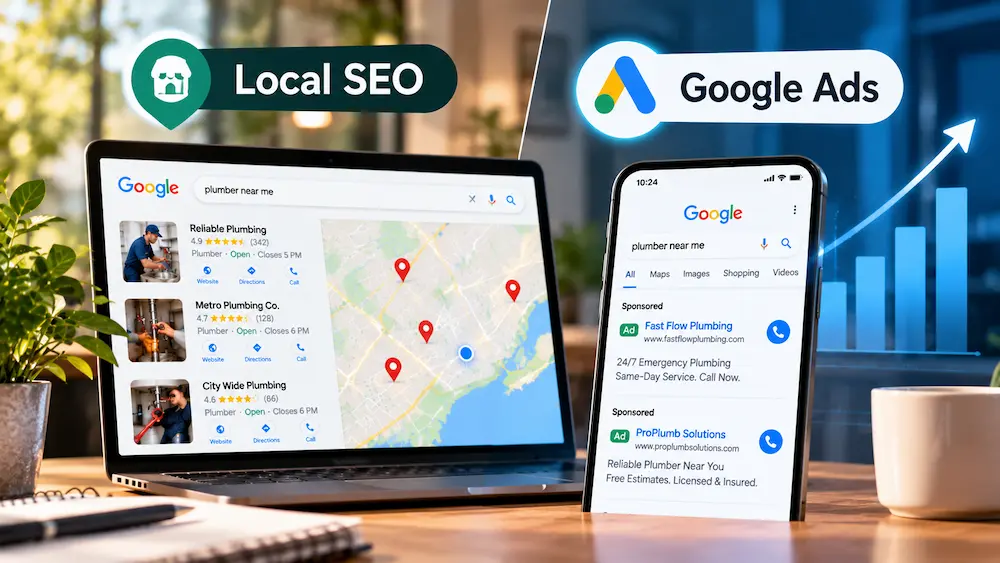
If you run a local business, you may ask: should you invest in local SEO or pay for Google Ads? Both can bring customers from Google. Both can be worth the money. But they work in very different ways, and the faster payback depends on your goals, budget, and how soon you need leads.
This local SEO vs. Google Ads guide gives a simple, practical comparison to help you decide.
The short answer
Google Ads pays back faster. Local SEO usually pays back more over time.
Ads can bring calls in a few days, but the leads stop when you stop paying. Local SEO takes months to build, but the results can keep coming without paying for each click. Many local businesses use both.
How Google Ads works for local businesses
With Google Ads, you pay to show at the top of search results for chosen keywords. You usually pay each time someone clicks. For Google Ads for local businesses, search campaigns, call ads, and location targeting are common ways to reach nearby customers.
In some industries and countries, Google also offers Google Local Services Ads. There, you pay per lead instead of per click. After screening, you may also get a Google Guaranteed badge.
Advantages of Google Ads
- Speed: campaigns can start sending clicks the same day they go live.
- Control: you choose keywords, locations, budgets, and schedules.
- Testing: you can quickly see which services and offers get interest.
- Planning: once tuned, it is easier to estimate leads from a set budget.
Downsides of Google Ads
- Ongoing cost: traffic stops when your budget runs out.
- Higher click costs: competitive fields like legal, plumbing, and home services can be costly.
- Waste risk: weak campaigns can spend on bad searches.
- Some users skip ads: many searchers click organic and map results instead.
How local SEO works
Local SEO is the work of improving your visibility in Google Maps and organic search results for local searches. It includes Google Business Profile optimization, reviews, website updates, local links, and accurate business details across the web.
Advantages of local SEO
- No cost per click: once you rank, calls and visits do not cost more per lead.
- Better over time: reviews, content, and authority build as you go.
- Trust: many customers trust map and organic results with strong reviews more than ads.
- Long-term asset: a well-ranked profile and site can keep working even if you pause marketing for a while.
Downsides of local SEO
- Slower results: if you ask, “How long does local SEO take?”, meaningful gains often need three to six months or more, depending on competition.
- Less control: Google's algorithm and searcher distance affect rank.
- Needs steady work: reviews, updates, and website changes need ongoing effort.
Side by side
- Time to first leads. Ads: days. Local SEO: usually months.
- Cost structure. Ads: pay per click or per lead. Local SEO: time or agency fees, with no cost per click.
- If you stop. Ads: leads stop fast. Local SEO: rankings fade slowly.
- Long-term ROI. Ads: steady, but limited by budget. Local SEO: often grows over time.
- Control and targeting. Ads: high. Local SEO: moderate.
- Customer trust. Ads: moderate. Local SEO: often higher, with strong reviews.
- Best for. Ads: fast leads, testing, seasonal pushes. Local SEO: steady growth, lower cost per lead.
Which pays back faster? It depends on your situation
Choose Google Ads first if
- You are a new business with no reviews or rankings yet.
- You need leads right away to cover costs.
- You have a seasonal business or a short offer.
- You want to test which services customers want most.
- Your Google Business Profile is suspended and you need a short-term lead source.
Choose local SEO first if
- You have a small monthly budget and can wait a few months for results.
- Clicks in your market are expensive.
- You already have reviews and a real location.
- You want to lower your cost per lead over time.
How to calculate payback for your business
To compare fairly, look at cost per lead and customer value, not just traffic.
- Estimate customer value. What is the average profit from one customer, including repeat business?
- Know your close rate. Out of every ten leads, how many become paying customers?
- Track cost per lead. For ads, divide total spend by leads. For SEO, divide your monthly spend by leads from Maps and organic search.
- Compare over time. Ads often have a steady cost per lead. SEO often starts higher and gets cheaper as rankings improve.
For example, if a customer is worth $500 in profit and you close one in four leads, each lead is worth about $125. Any channel that brings leads for less than that can work, and the gap between channels shows how fast it pays back.
Set up call tracking and UTM links on your Google Business Profile and your ads first. Then you can see where each lead came from. Without that, the math is a guess.
The best strategy: use both
For most local businesses, the best move is a mix:
- Start with ads to get quick revenue and learn which keywords convert.
- Invest in local SEO at the same time so organic and map rankings grow in the background.
- Shift budget slowly from ads to SEO as organic leads rise.
- Keep ads for high value keywords, busy seasons, or areas where you do not rank yet.
Showing up in both ads and map results for the same search can also boost trust, because people see your name more than once.
Final thoughts
If you need customers this week, Google Ads is faster. If you want the lowest cost per lead over the next year and beyond, local SEO usually wins. The smartest local businesses use ads for speed and SEO for stability, and they track results so each dollar goes where it works best.
The measuring part is often missed, and it can decide the choice. Our lead generation service connects calls, forms, and bookings back to the search that brought them. Get a free audit and we will show you what your channels really cost per lead.
Frequently Asked Questions
Should a new local business start with Google Ads or local SEO?
Short answer: A new local business often starts with Google Ads because ads can bring leads in days, even before the business has reviews or strong rankings. But it should also start local SEO at the same time so Google Business Profile visibility, reviews, website trust, and organic rankings can grow in the background.
Why does local SEO usually produce better long-term ROI than Google Ads?
Short answer: Local SEO can become more cost-effective over time because there is no cost per click once rankings improve. Reviews, content, local links, and website changes build on each other, which can lower cost per lead as organic and Maps visibility grows. Google Ads can still work well, but lead volume is tied to budget and stops when spending stops.
How long should a business expect local SEO to take before seeing meaningful results?
Short answer: Meaningful local SEO gains often take three to six months or more, depending on competition, location, review strength, website quality, and how established the business is. In crowded markets, it can take longer.
What is the most important metric for comparing Google Ads and local SEO?
Short answer: Cost per lead is the key metric, but compare it with customer value and close rate. If a lead is worth about $125 based on profit and close rate, then any channel that brings leads below that amount can be profitable. Tracking calls, forms, bookings, and UTM links helps make the comparison accurate.
When should a business keep running ads even after local SEO improves?
Short answer: Ads can still help with high-value keywords, peak seasons, short offers, new services, or areas where the business does not rank yet. Even with strong local SEO, appearing in both ads and map results can raise visibility and trust.